
Green transition in the Balkans: How a lack of planning fueled waves of Serbian protests
Talk by Aleksandar Matković, followed by a conversation with Nikola Lero and Tea Sindbæk Andersen.
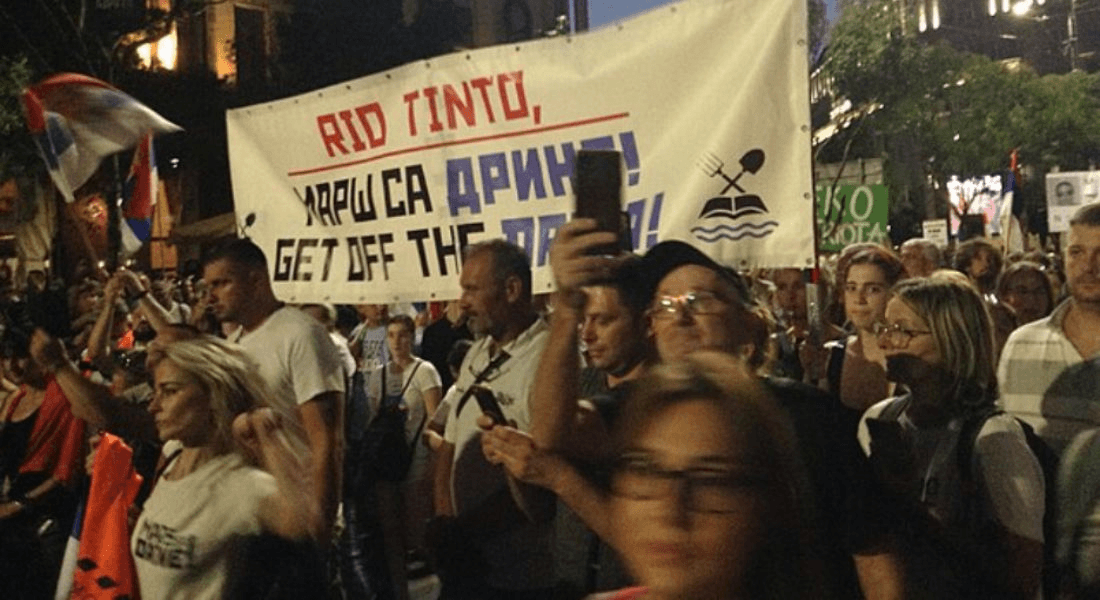
In recent years, Serbia has been shaken by massive social and political protests against corruption, authoritarian politics and police violence – and also against internationally supported mining projects connected to the green transition. How can we understand these protests that, among others, also aim to protect a local environment against international investments?
In this talk, Aleksandar Matković examines the "economics behind the protests" across Serbia and the Balkans, in light of the challenges related to the outsourcing of production over the past decade, both from Eastern and Western economies. Much of the Southeast European region continues to rely heavily on foreign direct investment as the primary driver of economic growth — a dependency that can be traced back to the collapse of Yugoslavia. This growing reliance has served as a catalyst for structural transformations that culminated in widespread protests following the announcement of the green transition in 2020. Huge demonstrations were particularly directed against lithium mining projects that are part of the European Union’s plans for green energy transition.
The talk will be followed by a conversation about the importance of environmental issues and the green transition as a core part of the widespread Serbian protests.
Registration
Please register for the event here.
Bios
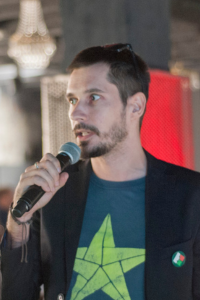
Aleksandar Matković
Aleksandar Matković is a political activist and a postdoctoral researcher at ICTA (Institute of sciences and technologies) at the Autonomous University of Barcelona, and a fellow at the Transnational Institute in Amsterdam. Among his main research interests are Marxism, imperialism and political economy.
 Nikola Lero
Nikola Lero is a PhD student at the University of Sheffield and a visiting fellow at CApE in Spring 2026. Nikola is a poet, activist, and researcher whose work bridges the intersections of migration, memory, and creative expression.
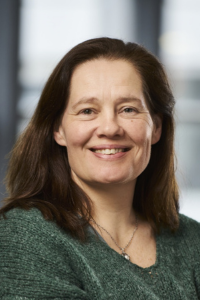 Tea Sindbæk Andersen
Tea Sindbæk Andersen is associate professor in East European Studies at the University of Copenhagen. Tea is humanities research fellow at CApE in the spring of 2026. Her research focuses on the contemporary history of Southeastern Europe, particularly on issues related to cultural memory, identity politics and popular culture.